


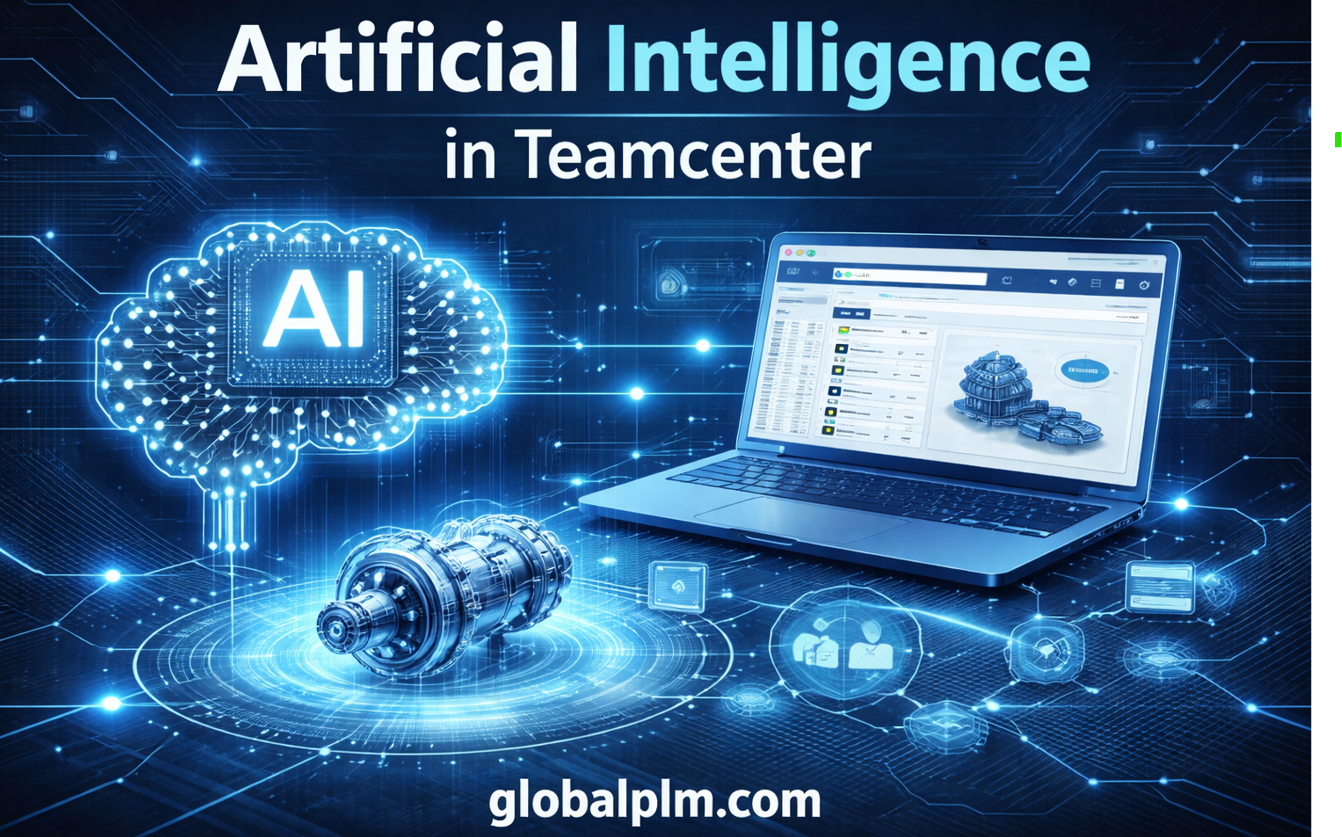
Understanding the Role of Artificial Intelligence in Teamcenter PLM
Introduction
As industries move toward digital engineering and smart manufacturing, Artificial Intelligence (AI) is becoming an essential technology. AI helps systems learn from data, identify patterns, and support better decision-making. Teamcenter, the Product Lifecycle Management (PLM) solution from Siemens, uses AI to simplify how companies manage product data, processes, and collaboration.
For students learning Teamcenter, understanding how AI is used within PLM systems is important because it shows how modern engineering tools go beyond data storage and become intelligent decision-support platforms.
What is Teamcenter and How Does AI Fit In?
Teamcenter is a PLM platform that manages product information throughout its entire lifecycle—from early design and engineering to manufacturing, service, and retirement. It acts as a central source of product data for different teams such as design, manufacturing, quality, and service.
When AI is integrated into Teamcenter, the system becomes more intelligent and efficient. AI technologies such as:
- Machine Learning
- Natural Language Processing
- Data analytics
help Teamcenter analyse large amounts of product data, reduce manual work, and support users with smart suggestions. Instead of users searching and analysing everything themselves, AI helps bring the right information at the right time.
How AI Is Used in Teamcenter (Industry Use Cases)
AI enhances Teamcenter in several practical ways that are easy for students to relate to real-world engineering scenarios.
- Smarter Design Decisions
AI can analyse previous designs, engineering data, and product structures to suggest improvements. This helps engineers avoid repeating mistakes and shortens the product development cycle.
- Predictive Maintenance Support
By studying historical equipment and service data, AI can help predict possible failures. This allows companies to plan maintenance activities in advance, reducing unexpected breakdowns and production delays.
- Automation of Routine Tasks
Many PLM activities, such as document handling, change management, and compliance tracking, involve repetitive steps. AI helps automate these processes, saving time and reducing human error.
- Improved Team Collaboration
AI-powered insights help different teams understand product data more easily. Engineers, managers, and service teams can see relevant information with context, improving communication and decision-making.
Benefits and Learning Challenges
Benefits for Industry and Learners
- Faster access to product information
- Reduced manual effort
- Better product quality
- Improved collaboration across teams
For students, learning AI-enabled Teamcenter provides exposure to future-ready PLM skills that are highly valued in the industry.
Challenges to Consider
- AI systems depend on high-quality data
- Organizations need skilled professionals to manage AI solutions
- Integrating AI into existing systems can be complex
Understanding these challenges helps students appreciate the importance of data management and system planning in PLM environments.
What to Expect in the Future
AI in Teamcenter is continuously evolving. Future enhancements may include:
- Integration with digital twins for real-time product behavior analysis
- Use of augmented reality (AR) for service and maintenance activities
- More advanced self-learning systems that improve over time
These developments will further transform how products are designed, built, and maintained.
Summary
The combination of Teamcenter and Artificial Intelligence represents a major shift in how industrial data is managed and used. AI makes Teamcenter more than a data repository—it turns it into an intelligent platform that supports smarter decisions and efficient workflows.
For students learning Teamcenter PLM, understanding AI concepts within PLM provides a strong foundation for careers in engineering, manufacturing, and digital transformation. As industries continue to adopt AI-driven solutions, Teamcenter will remain a key platform shaping the future of product lifecycle management.
=================================================================================================================================================
What’s Next? We have more deep dives into PLM Tutorials, Teamcenter, and Active Workspace coming your way soon.
We value your feedback! Please share your thoughts in the comment section below.
If you have specific technical questions, feel free to post them in our Forum via the “Add Topics” button, and our team will provide a solution as soon as possible.

Stay Connected:
Follow us on our social media platforms for the latest updates, or
reach out with suggestions at [email protected].
[Facebook] | [LinkedIn] | [YouTube] | [WhatsApp +91-9545389857]
— Team GlobalPLM